Advancing Through Reward Layers: The Influence of Mobile Security Protocols in Digital Gaming Environments
Katja Jung · Nov 5, 2026

Advancing Through Reward Layers: The Influence of Mobile Security Protocols in Digital Gaming Environments
Digital gaming environments rely on mobile security protocols to manage player progression through layered reward structures, and these systems combine encryption standards with authentication processes that verify transactions and account activities at each tier. Researchers at institutions such as the University of Nevada Reno have documented how protocols like TLS 1.3 and multi-factor authentication reduce unauthorized access attempts by up to 78 percent in reward-based applications, allowing legitimate users to accumulate points and unlock higher status levels without interruption from external interference.
Core Components of Mobile Security in Gaming Platforms
Security frameworks in these platforms incorporate device fingerprinting alongside behavioral analytics, which track patterns in login frequency and spending habits to flag anomalies before they affect reward accumulation. Data from the Canadian Centre for Cyber Security indicates that platforms employing real-time threat detection maintain higher retention rates across loyalty tiers because players experience fewer account freezes during high-value redemptions. These measures connect directly to progression mechanics, since compromised sessions often trigger temporary holds that delay access to premium features or bonus multipliers.
Layered reward systems typically feature entry-level entry points that escalate to elite status, and security protocols enforce eligibility checks at each stage through tokenization of payment data and session encryption. Observers note that when protocols align with standards from the Australian Cyber Security Centre, the verification process for advancing from silver to gold tiers completes in under three seconds on average, compared with longer delays on less protected networks. This efficiency stems from integrated APIs that cross-reference device health reports with player history before approving upgrades.
Impact on Progression Mechanics and Player Pathways
Progression through rewards hinges on uninterrupted data flows, and mobile security directly shapes these flows by blocking injection attacks that could artificially inflate point balances. Figures released in November 2026 by the Nevada Gaming Control Board show a 14 percent increase in verified tier advancements on platforms that updated their certificate pinning requirements during the prior quarter. Players who encounter fewer verification prompts report smoother transitions between levels, while those on unsecured connections face repeated challenges that stall momentum toward exclusive events or personalized offers.
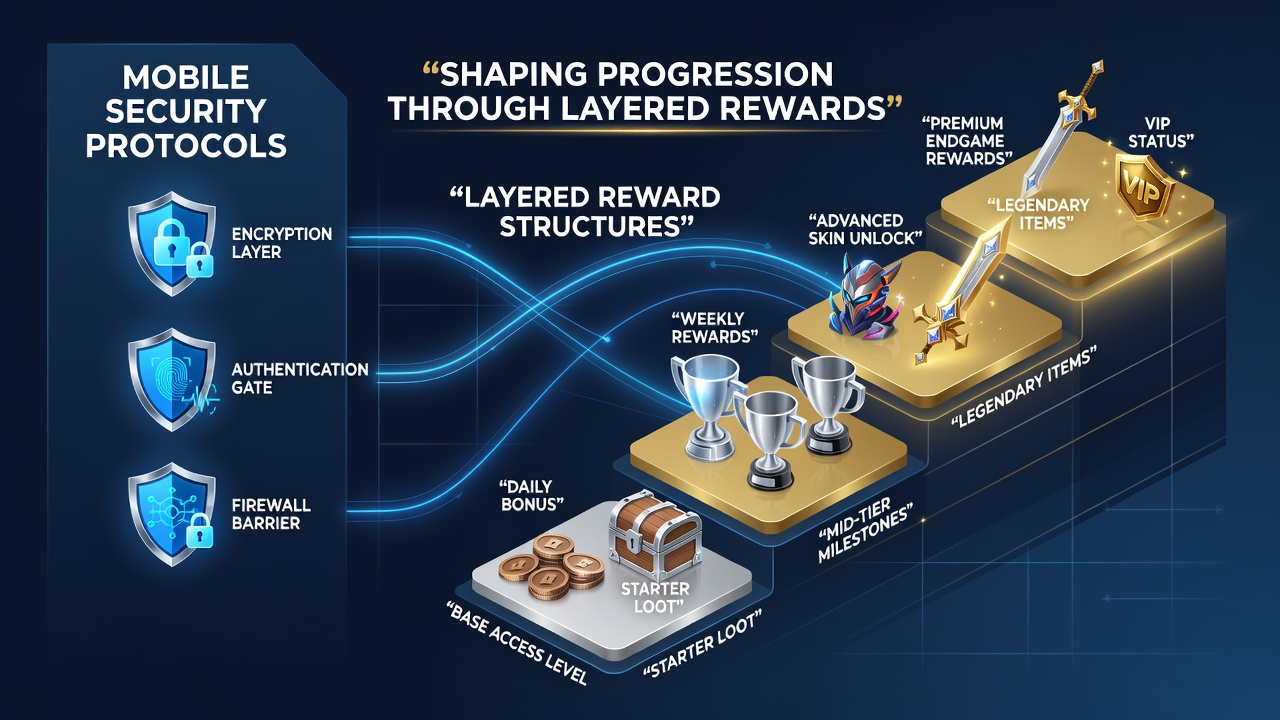
Case studies from European operators reveal that biometric authentication layers reduce drop-off rates during mid-tier qualification periods, because users complete identity confirmations once rather than repeatedly across sessions. The same studies highlight how end-to-end encryption prevents interception of reward codes, preserving the integrity of points that players exchange for virtual items or real-world prizes. When protocols incorporate zero-trust architectures, every request for status elevation undergoes independent validation regardless of prior clearances, which minimizes instances of reward manipulation reported in industry audits.
Regulatory and Industry Standards Shaping Implementation
Compliance with frameworks from bodies such as the New Jersey Division of Gaming Enforcement requires documented logging of all security events tied to reward redemptions, creating audit trails that operators use to demonstrate fair progression rules. These requirements extend to mobile environments where geolocation verification combines with protocol checks to confirm players remain within approved jurisdictions while climbing tiers. Industry reports from the Gaming Standards Association further show that standardized security modules allow cross-platform reward portability, letting users carry progress between devices without resetting their advancement history.
Token-based access controls limit exposure of sensitive reward data during transfers between game servers and mobile clients, and this approach supports seamless level-ups even during peak traffic periods. Research published by the National Institute of Standards and Technology outlines how continuous monitoring protocols detect credential stuffing attempts that target high-tier accounts specifically, thereby protecting the most valuable progression milestones from external threats. Platforms that integrate these controls report fewer disputes over denied redemptions, since security logs provide clear evidence of legitimate activity patterns.
Future Directions in Protocol Development
Emerging quantum-resistant algorithms are entering testing phases for gaming applications, with pilot programs expected to expand by late 2026 to safeguard long-term reward ledgers against advanced decryption risks. These developments build on existing symmetric key exchanges that already secure daily point accruals and status notifications. Observers tracking adoption rates note that early implementation correlates with sustained player engagement across extended reward cycles, particularly in environments where loyalty programs span multiple game genres.
Conclusion
Mobile security protocols establish the foundation for reliable advancement within layered reward structures by securing data exchanges and validating eligibility at every stage. Evidence from regulatory reports and technical studies confirms that stronger authentication and encryption measures correlate with higher completion rates for tier transitions, while also reducing the frequency of account interventions that interrupt progress. As platforms continue to refine these systems, the connection between protocol robustness and reward integrity remains central to operational stability in digital gaming environments.